Ameca
Social humanoid robot for human-robot interaction
Price
Price not publicly disclosed
No defensible public pricing observation is documented yet.
Key facts
Values reflect the public record
- Height
- 1870 mmManufacturer confirmed
- Weight
- 62 kgManufacturer confirmed
- Payload
- No public data documented
- Degrees of freedom
- 61Manufacturer confirmed
- Runtime
- No public data documented
- Max speed
- No public data documented
Canonical robot record
Overview
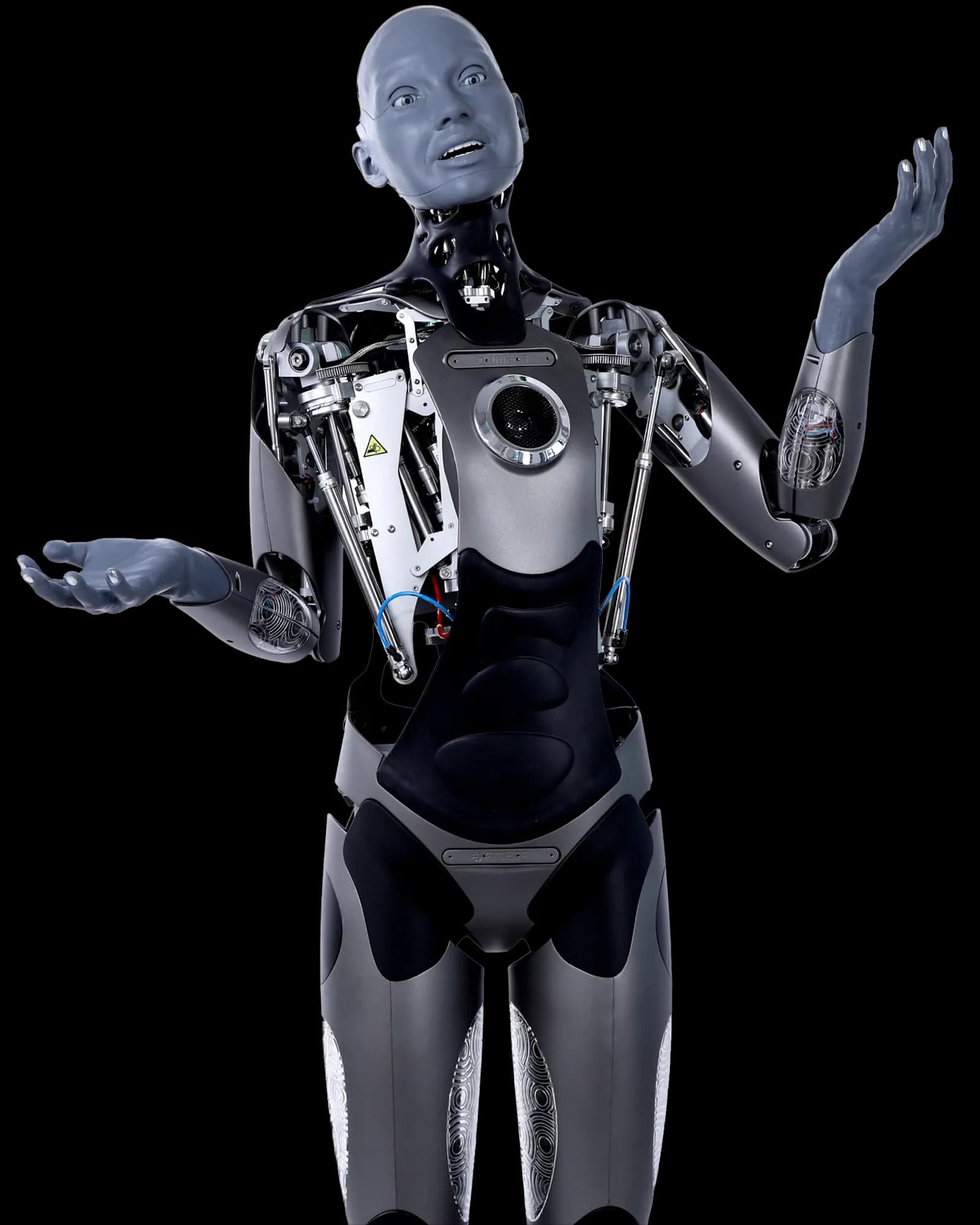
Ameca is a social humanoid robot built by Engineered Arts, a company founded in Cornwall, United Kingdom. It is designed primarily as a platform for human-robot interaction and as a development base for artificial-intelligence and machine-learning research. The robot presents a neutral-gender humanoid form with grey skin over a visible metal shell.
The robot is built around the company's Tritium platform, a web-based software system that can be accessed from any internet-connected computer without local installation. Ameca supports natural-language conversation across many languages and can produce a wide range of facial expressions, gestures, and animations that can be customized by operators.
Engineered Arts positions Ameca for entertainment, education, research, and telepresence-style applications, and offers it both for rental and for purchase via quote. It is intended for indoor use within a controlled temperature and humidity range and runs on standard domestic mains power.
RoboZaps maintains this record as part of its canonical robotics database. Specs are source-verified where linked; the record compares public facts across manufacturers rather than representing a single robot maker.
- Spec sources
- 1 linked
- Verification
- Verified · 7/7 specs source-verified
- Deployment
- Paid Deployment
- Last verified
- Jul 6, 2026
Key Features
- Highly articulated head, face, and upper body capable of lifelike expressions and gestures
- Eye-mounted cameras and spatial audio microphones for perception and interaction
- Natural-language conversation support across many languages via the Tritium platform
- LiDAR sensing and emergency-stop safety mechanisms for safe operation around people
- Web-based control with customizable animations, gestures, and personality profiles
Reviews & analysis from the RoboZaps blog
Editorial analysis lives on the blog; this database record stays focused on verified facts.
Specifications
Grouped technical data with source detail available on demand.
9 documented values
Connectivity
| Communication | RJ45 Ethernet; Wi-Fi listed as coming soonManufacturer confirmedVerified Jul 6, 2026 Engineered Arts |
|---|
Mechanics
| Degrees of Freedom | 61Manufacturer confirmedVerified Jul 6, 2026 Engineered Arts |
|---|---|
| Locomotion | StationaryManufacturer confirmedVerified Jul 6, 2026 Engineered Arts |
Performance
| Reach | 1800 mmManufacturer confirmedVerified Jul 6, 2026 Engineered Arts |
|---|
Physical
| Height | 1870 mmManufacturer confirmedVerified Jul 6, 2026 Engineered Arts |
|---|---|
| Weight | 62 kgManufacturer confirmedVerified Jul 6, 2026 Engineered Arts |
| Width | 470 mm Unverified |
| Depth | 850 mm Unverified |
Sensing
| Sensors | Cameras in eyes, microphones, facial trackingManufacturer confirmedVerified Jul 6, 2026 Engineered Arts |
|---|
Evidence & changelog
Sources behind this record and material corrections made over time.
Sources
- Engineered Arts - tranche-1 verification · Engineered Arts — cites Degrees of Freedom, Locomotion, Sensors, Communication, Height, Weight, Reach
Record changelog
- Height: 1780 mm changed to 1870 mm · Jul 6, 2026
tranche-1 verification (corrected): Spec page says 1870 mm; fixes conflict with core field
- Communication: Ethernet, WiFi changed to RJ45 Ethernet; Wi-Fi listed as coming soon · Jul 6, 2026
tranche-1 verification (corrected): Manufacturer: Wi-Fi 'coming soon', not yet shipping
- Degrees of Freedom: 52 changed to 61 · Jul 6, 2026
tranche-1 verification (corrected): Current Gen 2.6 spec lists 61 DoF
Media
Manufacturer
UK robotics company creating advanced humanoid robots including Ameca, RoboThespian, and Mesmer for entertainment and research applications.
- Headquarters
- Penryn, UK
- Founded
- 2004