Pepper
Humanoid robot that reads and responds to emotions
Price
Historical record
No current purchase price is documented.
Key facts
Values reflect the public record
- Height
- 1210 mmPress release
- Weight
- 28 kgPress release
- Payload
- No public data documented
- Degrees of freedom
- 20Press release
- Runtime
- 12 hoursPress release
- Max speed
- 3 km/hPress release
Canonical robot record
Overview
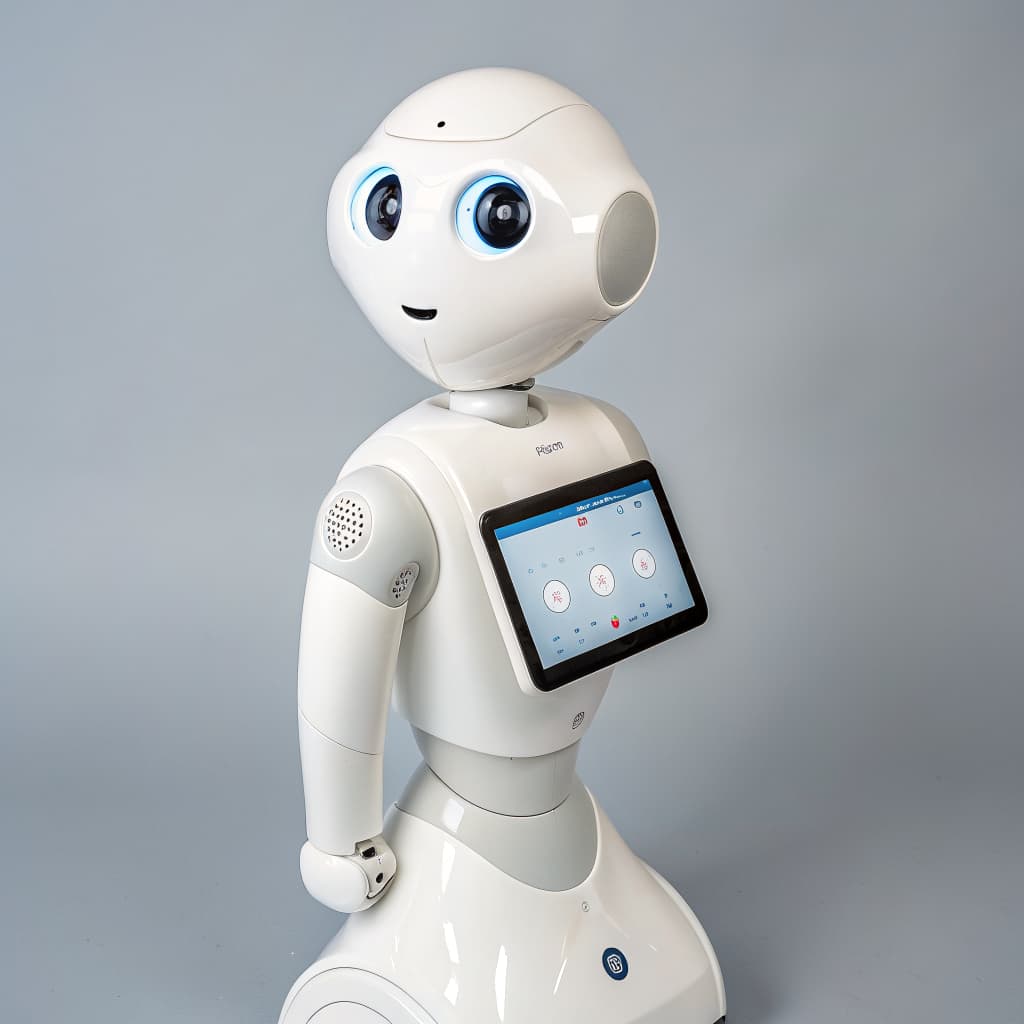
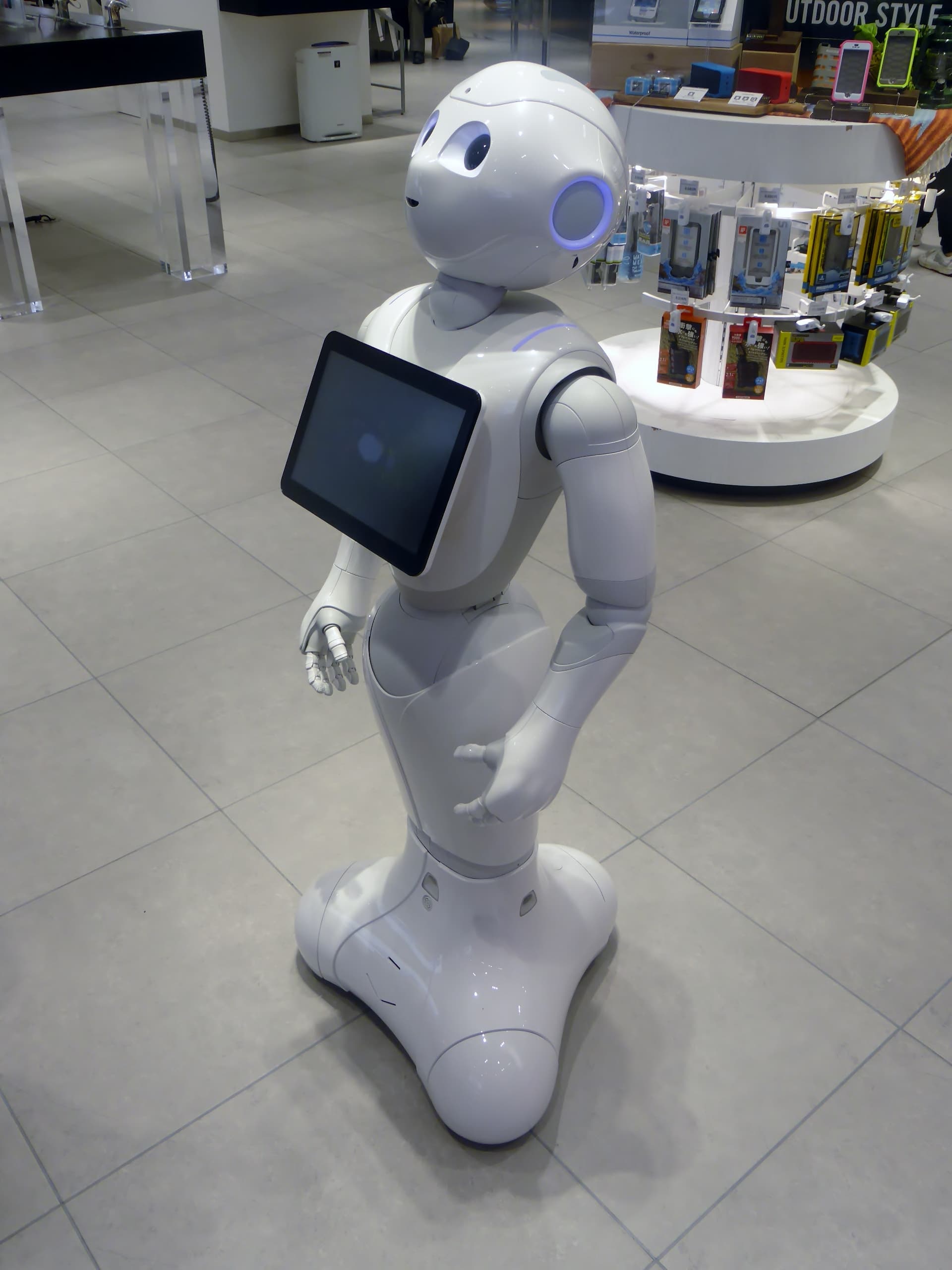
Pepper is a social humanoid robot originally developed jointly by SoftBank Mobile and Aldebaran Robotics and unveiled in Tokyo in 2014. Rather than performing industrial or physical labor, Pepper is built to communicate with people, using cameras, microphones, and an array of sensors to perceive its environment and respond to human emotion and behavior. A touch display mounted on its chest supplements spoken conversation and gestures.
The robot moves on an omnidirectional wheeled base rather than legs, allowing it to navigate flat indoor spaces smoothly while engaging people through articulated arms, hands, and an expressive head. SoftBank Robotics markets Pepper as a customer-facing assistant that can greet visitors, answer questions, make recommendations, and collect feedback.
Pepper is deployed across a range of service settings including retail, banking, hospitality, education, and healthcare, where it is positioned to handle routine interactions and free human staff for higher-value work.
RoboZaps maintains this record as part of its canonical robotics database. Specs are source-verified where linked; the record compares public facts across manufacturers rather than representing a single robot maker.
- Spec sources
- 1 linked
- Verification
- Verified · 9/9 specs source-verified
- Deployment
- Discontinued
- Last verified
- Jul 6, 2026
Key Features
- Emotion-aware interaction using cameras, microphones, and sensors to perceive and respond to people
- Multimodal communication through speech, body language, and a chest-mounted touch display
- Omnidirectional wheeled base for smooth navigation across flat indoor environments
- Articulated arms, hands, and head for expressive, human-like gestures
- Designed for customer-facing roles across retail, hospitality, banking, education, and healthcare
Specifications
Grouped technical data with source detail available on demand.
11 documented values
Connectivity
| Communication | WiFi, EthernetPress releaseVerified Jul 6, 2026 SoftBank |
|---|
Mechanics
| Degrees of Freedom | 20Press releaseVerified Jul 6, 2026 SoftBank |
|---|---|
| Locomotion | WheeledPress releaseVerified Jul 6, 2026 SoftBank |
Performance
| Max Speed | 3 km/hPress releaseVerified Jul 6, 2026 SoftBank |
|---|
Physical
| Height | 1210 mmPress releaseVerified Jul 6, 2026 SoftBank |
|---|---|
| Weight | 28 kgPress releaseVerified Jul 6, 2026 SoftBank |
| Width | 485 mm Unverified |
| Depth | 425 mm Unverified |
Power
| Runtime | 12 hoursPress releaseVerified Jul 6, 2026 SoftBank |
|---|
Sensing
| Sensors | 2 RGB cameras, 3D camera, 4 microphones, touch sensors, sonar, laser, gyro, bumpersPress releaseVerified Jul 6, 2026 SoftBank |
|---|
Software
| SDK Support | YesPress releaseVerified Jul 6, 2026 SoftBank |
|---|
Deployment and commercial evidence
Deployment evidence
Pepper Production Status — Internal Assessment
SoftBank Robotics paused Pepper production in 2020/21; Aldebaran entered receivership in June 2025 and was acquired by Maxvision Technology. No new production of Pepper announced as of 2026.
Integration & SDK
- ROS support
- Supported
- SDK available
- Supported
- API docs
- View docs (opens in a new tab)
- Supported platforms
- Linux, ROS 1, Python, C++, Java, JavaScript
Support & service
Regions
—Support details not available
Evidence & changelog
Sources behind this record and material corrections made over time.
Sources
- SoftBank - tranche-1 verification · SoftBank — cites Weight, Height, Degrees of Freedom, Battery Life, Max Speed, Sensors, Locomotion, Communication, SDK Support
Media
Manufacturer
Creator of Pepper and NAO humanoid robots for retail, education, and healthcare applications.
- Headquarters
- Tokyo, Japan
- Founded
- 2014