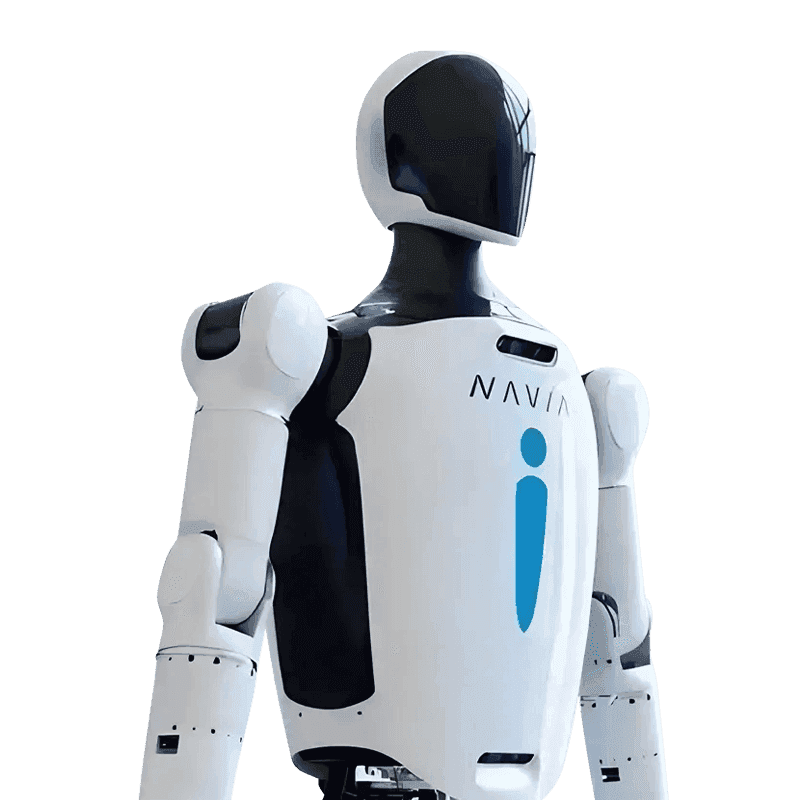
Navigator 2
General-purpose humanoid robot by NAVIAI
Price
Price not publicly disclosed
Record checked Jul 10, 2026
Key facts
Values reflect the public record
- Height
- 165 cm (numeric_value 1650 in canonical mm)Third-party source
- Weight
- 60 kgThird-party source
- Payload
- 5 kgThird-party source
- Degrees of freedom
- 41Press release
- Runtime
- 2 hoursThird-party source
- Max speed
- 1.67 m/sThird-party source
Canonical robot record
Overview
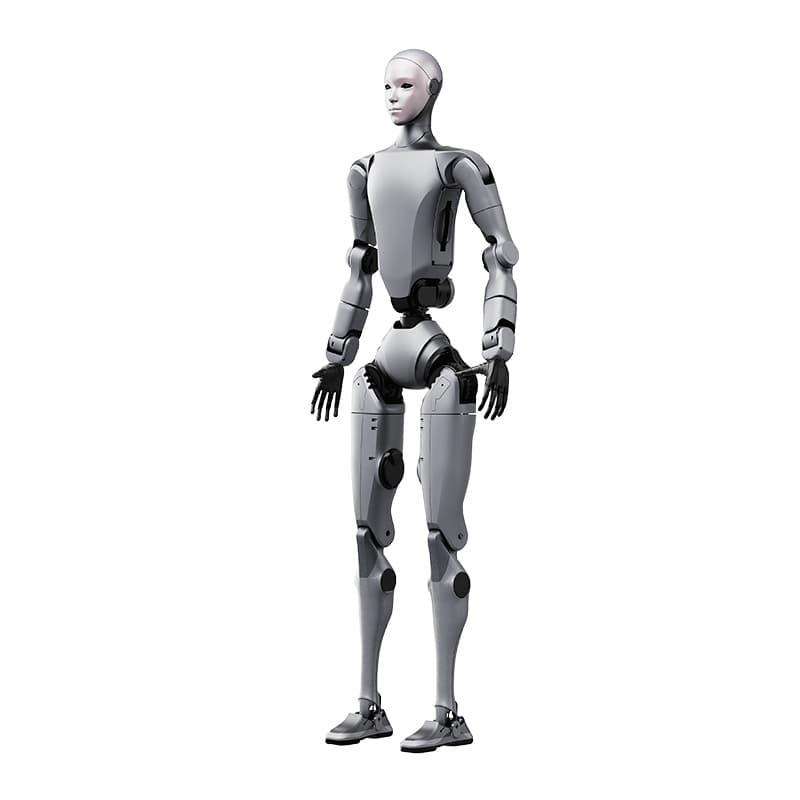
Navigator 2, branded NAVIAI-i2, is a general-purpose humanoid robot from the Zhejiang Humanoid Robot Innovation Center, a Chinese embodied-intelligence company founded around the research team of Professor Xiong Rong. It is the second generation in the maker's Navigator (领航者) line, following Navigator 1, and was presented in 2024.
The robot combines full-body anthropomorphic walking with a precision manipulation arm, and the maker positions it as China's first humanoid robot able to operate tools at sub-millimetre working accuracy. It uses multimodal perception to interact naturally with people and to navigate and operate in dynamic environments.
Navigator 2 is targeted at practical deployments such as industrial assembly, guidance and reception, and retail, reflecting the center's stated goal of moving general-purpose humanoids toward real-world productivity.
RoboZaps maintains this record as part of its canonical robotics database. Specs are source-verified where linked; the record compares public facts across manufacturers rather than representing a single robot maker.
- Spec sources
- 2 linked
- Verification
- Verified · 8/8 specs source-verified
- Deployment
- Announced
- Last verified
- Jul 10, 2026
Key Features
- Full-body anthropomorphic, human-mapped walking with large-stride upright gait
- High-precision manipulation arm capable of sub-millimetre tool operation
- Multimodal perception combining vision, depth, force-torque, and touch sensing for natural human-robot interaction
- Self-developed, full-stack design by the Zhejiang Humanoid Robot Innovation Center
Specifications
Grouped technical data with source detail available on demand.
8 documented values
Mechanics
| Degrees of Freedom | 41Press release |
|---|---|
| Locomotion | BipedalThird-party sourceVerified Jul 10, 2026 Haishu District government news (opens in a new tab) |
Performance
| Max Speed | 1.67 m/sThird-party sourceVerified Jul 10, 2026 Haishu District government news (opens in a new tab) |
|---|---|
| Payload Capacity | 5 kgThird-party sourceVerified Jul 10, 2026 Haishu District government news (opens in a new tab) |
Physical
| Height | 165 cm (numeric_value 1650 in canonical mm)Third-party sourceVerified Jul 10, 2026 Haishu District government news (opens in a new tab) |
|---|---|
| Weight | 60 kgThird-party sourceVerified Jul 10, 2026 Haishu District government news (opens in a new tab) |
Power
| Runtime | 2 hoursThird-party sourceVerified Jul 10, 2026 Haishu District government news (opens in a new tab) |
|---|
Sensing
| Sensors | Surround-view cameras, depth sensors, force/torque sensors, touch sensorsThird-party sourceVerified Jul 10, 2026 Haishu District government news (opens in a new tab) |
|---|
Evidence & changelog
Sources behind this record and material corrections made over time.
Sources
- Haishu District government news - tranche-8 verification (opens in a new tab) · Haishu District government news — cites Sensors, Locomotion, Battery Life, Max Speed, Payload Capacity, Weight, Height
- Chinese tech press (1ai.net; corroborated by humanoid.press, aibase) - tranche-8 verification (opens in a new tab) · Chinese tech press (1ai.net; corroborated by humanoid.press, aibase) — cites Degrees of Freedom
Record changelog
- Height: 165 cm changed to 165 cm (numeric_value 1650 in canonical mm) · Jul 10, 2026
tranche-8 verification (corrected): CM-AS-MM DEFECT: value '165 cm' is correct (1.65 m confirmed) but numeric_value=165 is stored against canonical_unit=mm. Must be 1650. Core height_mm 1650 is alread
Manufacturer
Government-backed center developing the Navigator bipedal humanoid series.
- Headquarters
- Hangzhou, China
- Founded
- 2024
- Website
- No public data documented