Sophia
Hanson Robotics' human-like social robot
Price
Price not publicly disclosed
No defensible public pricing observation is documented yet.
Key facts
Values reflect the public record
- Height
- No public data documented
- Weight
- No public data documented
- Payload
- No public data documented
- Degrees of freedom
- No public data documented
- Runtime
- No public data documented
- Max speed
- No public data documented
Canonical robot record
Overview
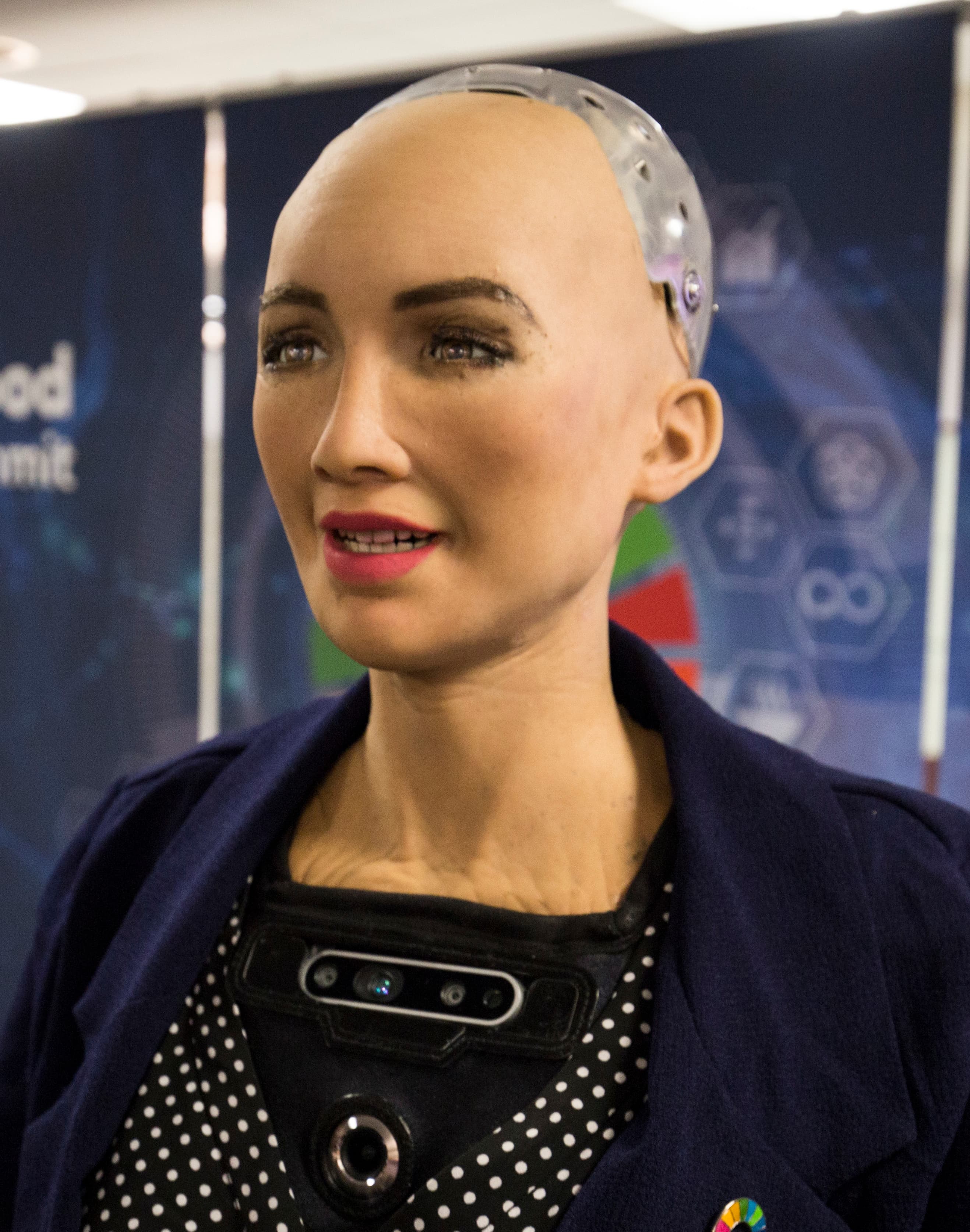
Sophia is a human-like social robot developed by Hanson Robotics and first introduced in 2016. The company describes her as its most advanced human-like robot, designed to look and interact in a relatable, lifelike way. Hanson Robotics classifies Sophia as a research and custom platform rather than a consumer product, positioning her among robots that represent years of work in AI, materials science, and artistic expression.
Sophia integrates conversational artificial intelligence with expressive facial animation and visual perception, allowing her to hold conversations, react with a range of facial expressions, and perceive the people and environment around her. She is primarily used for AI and human-robot interaction research, custom engagements, and high-profile public demonstrations.
The company is headquartered in Hong Kong and was founded by David Hanson, with Sophia serving as its flagship demonstration of relatable, human-like robotics.
RoboZaps maintains this record as part of its canonical robotics database. Specs are source-verified where linked; the record compares public facts across manufacturers rather than representing a single robot maker.
- Spec sources
- 2 linked
- Verification
- Partially verified · 2/3 specs source-verified
- Deployment
- Announced
- Last verified
- Jul 17, 2026
Key Features
- Natural language processing for spoken conversation
- A wide range of lifelike facial expressions
- Computer vision for perceiving people and surroundings
- Human-like appearance built on Hanson Robotics' expressive face technology
- Offered as a research and custom platform rather than an off-the-shelf consumer product
Specifications
Grouped technical data with source detail available on demand.
3 documented values
Connectivity
| Communication | WiFi, speech recognition Unverified |
|---|
Mechanics
| Locomotion | Walking-capable (legs added ~2018); commonly presented stationaryManufacturer confirmedVerified Jul 6, 2026 Hanson Robotics via Internet Archive |
|---|
Sensing
| Sensors | Cameras in eyes, facial recognitionThird-party sourceVerified Jul 6, 2026 Wikipedia |
|---|
Evidence & changelog
Sources behind this record and material corrections made over time.
Sources
- Hanson Robotics via Internet Archive - tranche-1 verification · Hanson Robotics via Internet Archive — cites Locomotion
- Wikipedia - tranche-1 verification · Wikipedia — cites Sensors
Record changelog
- Locomotion: Stationary changed to Walking-capable (legs added ~2018); commonly presented stationary · Jul 6, 2026
tranche-1 verification (corrected): Manufacturer: walking body, adaptive walking; live site lists Walking Capability
Media
Manufacturer
Creator of Sophia and other AI-powered humanoid robots for social interaction, healthcare, and education.
- Headquarters
- Hong Kong
- Founded
- 2007