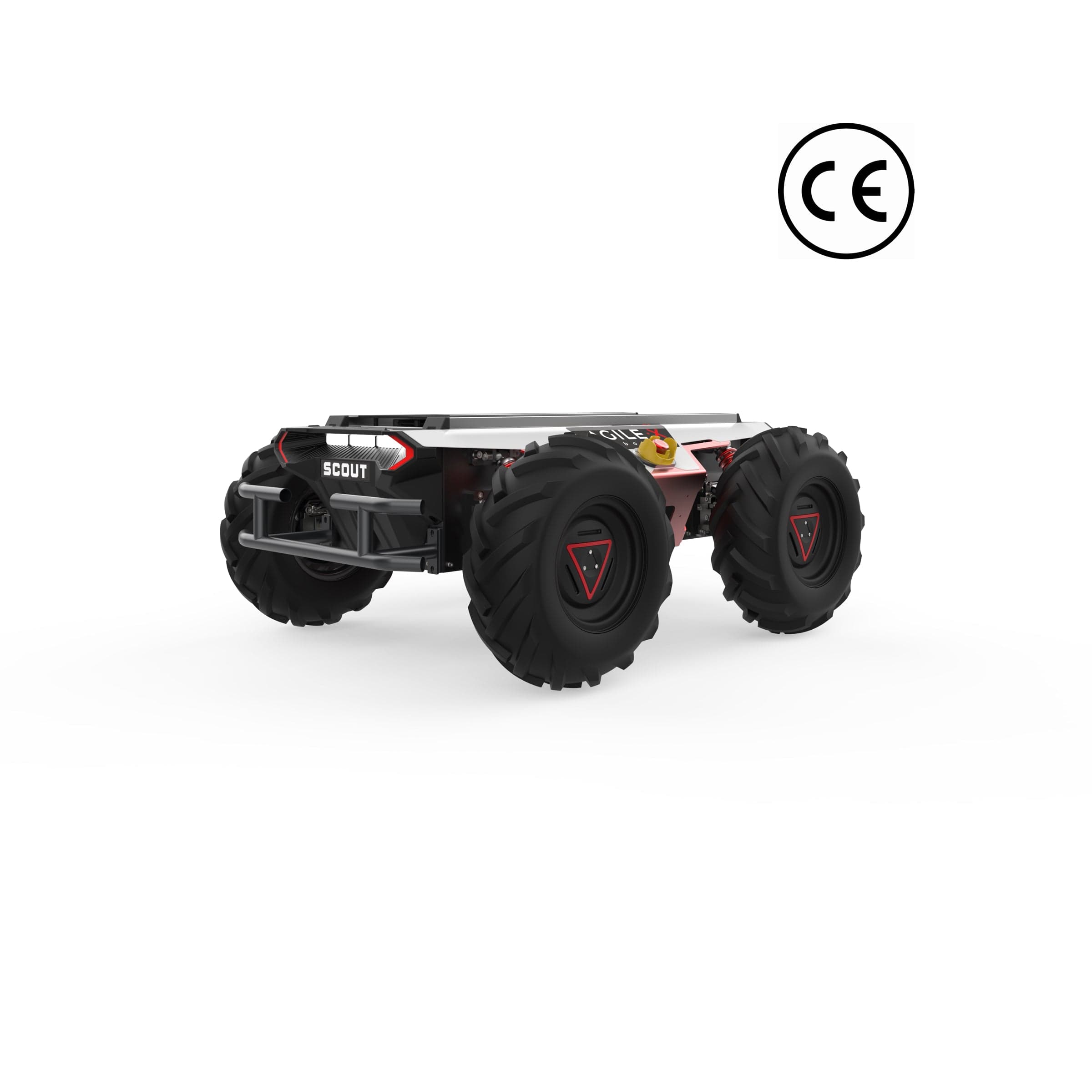
Scout 2
Steer-by-wire four-wheel-drive outdoor UGV chassis
Price
Price not publicly disclosed
Record checked Jul 9, 2026
Key facts
Values reflect the public record
- Height
- 349 mmThird-party source
- Weight
- 62 kgManufacturer confirmed
- Payload
- 50 kgManufacturer confirmed
- Degrees of freedom
- No public data documented
- Runtime
- No public data documented
- Max speed
- 1.5 m/sManufacturer confirmed
Canonical robot record
Overview
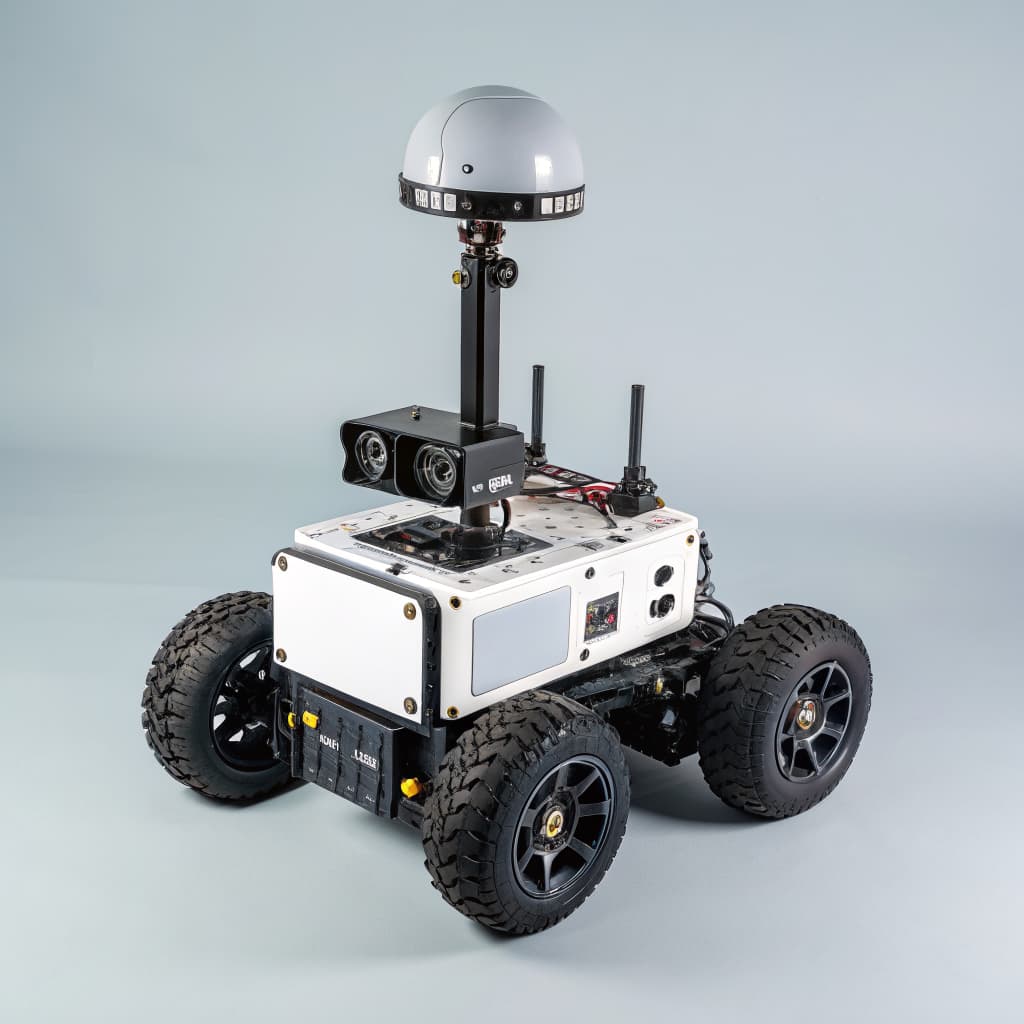
Scout 2.0 is AgileX Robotics' steer-by-wire outdoor mobile robot chassis, an evolution of the original Scout with a more compact, remolded structure that lets it move freely between indoor and outdoor environments and even fit inside a standard elevator or a car trunk. It is a four-wheel-drive platform with independent suspension on every wheel, an upgraded internal and external circulating cooling system, and real-time temperature monitoring for reliable operation in high-temperature conditions. The chassis is built for secondary development, carrying different upper-body loads and navigation systems for inspection, transportation, teaching, and similar applications.
RoboZaps maintains this record as part of its canonical robotics database. Specs are source-verified where linked; the record compares public facts across manufacturers rather than representing a single robot maker.
- Spec sources
- 3 linked
- Verification
- Verified · 8/8 specs source-verified
- Deployment
- Paid Deployment
- Last verified
- Jul 9, 2026
Key Features
- Four-wheel independent drive with four-wheel differential steering and a zero turning radius for navigating narrow spaces
- Double-wishbone independent suspension on each wheel for stability and terrain adaptability on rugged paths
- Upgraded integrated cooling system with real-time temperature monitoring for high-temperature environments
- Standardized CAN bus and serial interfaces plus open-source SDK and ROS package for rapid secondary development
- Top deck with aluminum profile rails and reserved bus interfaces for mounting sensors
- Compatible with advanced autonomous driving stacks such as ROS as a development mobile platform
Specifications
Grouped technical data with source detail available on demand.
10 documented values
Environment
| Operating Temperature | 0°C to 40°CManufacturer confirmedVerified Jul 9, 2026 AgileX Robotics (SCOUT 2.0 product sheet) (opens in a new tab) |
|---|
Mechanics
| Locomotion | WheeledManufacturer confirmedVerified Jul 9, 2026 AgileX Robotics (SCOUT 2.0 product sheet) (opens in a new tab) |
|---|
Performance
| Max Speed | 1.5 m/sManufacturer confirmedVerified Jul 9, 2026 AgileX Robotics (opens in a new tab) |
|---|---|
| Payload Capacity | 50 kgManufacturer confirmedVerified Jul 9, 2026 AgileX Robotics (opens in a new tab) |
Physical
| Height | 349 mmThird-party sourceVerified Jul 9, 2026 Trossen Robotics (official AgileX distributor docs) (opens in a new tab) |
|---|---|
| Weight | 62 kgManufacturer confirmedVerified Jul 9, 2026 AgileX Robotics (SCOUT 2.0 product sheet) (opens in a new tab) |
| Width | 699 mm Unverified |
| Depth | 930 mm Unverified |
Software
| ROS Compatible | YesManufacturer confirmedVerified Jul 9, 2026 AgileX Robotics (SCOUT 2.0 product sheet) (opens in a new tab) |
|---|---|
| SDK Support | YesManufacturer confirmedVerified Jul 9, 2026 AgileX Robotics (SCOUT 2.0 product sheet) (opens in a new tab) |
Evidence & changelog
Sources behind this record and material corrections made over time.
Sources
- AgileX Robotics (SCOUT 2.0 product sheet) - tranche-6 verification (opens in a new tab) · AgileX Robotics (SCOUT 2.0 product sheet) — cites Operating Temperature, Locomotion, SDK Support, ROS Compatible, Weight
- Trossen Robotics (official AgileX distributor docs) - tranche-6 verification (opens in a new tab) · Trossen Robotics (official AgileX distributor docs) — cites Height
- AgileX Robotics - tranche-6 verification (opens in a new tab) · AgileX Robotics — cites Max Speed, Payload Capacity
Record changelog
- Weight: 35 kg changed to 62 kg · Jul 9, 2026
tranche-6 verification (corrected): Product sheet 'Gross Vehicle Weight 62KG' (vehicle's own weight; rated load listed separately as 50 kg); consistent with core weight_kg=62. Trossen lists 68 kg. The
- Height: 320 mm changed to 349 mm · Jul 9, 2026
tranche-6 verification (corrected): 930x699x349 mm per Trossen docs and the AgileX product-sheet dimension drawing (sheet text prints 348). Consistent with this record's own core height_mm=349; the 32
- Operating Temperature: -10°C to 40°C changed to 0°C to 40°C · Jul 9, 2026
tranche-6 verification (corrected): Official product sheet 'Working Temp 0~40℃'; Trossen docs agree (0°C to 40°C). The -10°C floor is unsourced (Scout Mini's range is -10~40°C — likely sibling bleed).
Media
Manufacturer
Developer of mobile robot chassis and unmanned ground vehicles for research, education, and industrial applications.
- Headquarters
- Shenzhen, China
- Founded
- 2016